




Sachin Bansal heads finance function for Wipro Consumer Care & Lighting in India and South Asia.
He moved to Wipro Consumer Care in 2022 and prior to that was the head of finance of Wipro Infrastructure Engineering (WIN). He joined WIN in 2007 and over the last 15 years has essayed several roles including Plant Finance, India Hydraulic Business Finance, Global Operations Finance and Mergers & Acquisitions.
A qualified Chartered Accountant and a Black Belt in Six Sigma, Sachin has led several successful initiatives to streamline and strengthen the Finance function. As part of the leadership team of WIN, he played a pivotal role in driving profitable growth with improved focus on ROCE, Productivity and Cost Optimization.

Isaac George has held several positions at Wipro across Sales & Marketing, Consulting, and IT Operations for over two decades. Since 2014, he has been leading People Function and Employee Relations at Wipro Infrastructure Engineering. Isaac also heads the group’s social initiatives efforts and works towards creating an inclusive environment for Persons with Disabilities.

Samir Gadgil is the Head HR for the Chief Growth Office and all Corporate Functions at Wipro. He is also Wipro Cares’ Pune Location Head.
Previously, Samir has worked as Head – HR for Digital Operations & Platforms and managed multiple initiatives under HR and People Supply Chain Functions, including Talent Acquisition, Talent Transformation, Workforce Management, Facilities & Transport.
A seasoned professional, Samir has also served as the Global Head- Compensation, and Benefits at Wipro and worked with best-in-class Manufacturing, Consulting, Financial, and IT Service Companies in a career spanning over two decades.
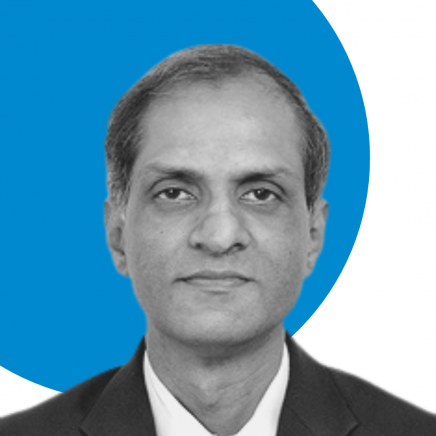
Narayan P S is the Global Head of Sustainability and Social Initiatives at Wipro Ltd. He is also the Managing Trustee at Wipro Foundation, the social initiatives arm of Wipro Ltd. He has been instrumental in the creation of Wipro’s sustainability initiative and has stewarded it since its inception in early 2008. Wipro’s sustainability charter is built on the core principle that business and social purpose must reinforce each other in addressing several key challenges around ecology and the environment, education, and communities.
In addition, Narayan is Visiting Faculty at the Azim Premji University where he teaches ‘Ecology and Development’ in the MA ( Development) program. He is also a Visiting Faculty at Xavier School of Sustainability, Xavier University, Bhubaneswar. Narayan also conducts learning sessions regularly on Sustainability at IIM Bangalore and IIM Indore.
Narayan’s interests center around (i) the broad interplay between Ecology, Economics, and Humanities (ii) the role of the business sector as a change agent in sustainable development (iii) Sustainability in Education, and (iv) Sustainable and Inclusive Cities.
Prior to the current role, Narayan was the Global Head of Information Systems for Wipro’s IT business, when he was chosen as one of CIO’s global 25 Ones to Watch.
A graduate in Electrical Engineering with a post-graduation in Management, Narayan has more than twenty-seven years of cross-disciplinary experience in Business Development, Enterprise Systems, and Corporate Sustainability. He is also involved in sustainability advocacy as a member of several industry forums on sustainability. He is currently the Chairman of the CII-GBC Greenco forum for Bangalore.

Vikrant has recently joined to lead the human resources function for Wipro Enterprises which includes Wipro Infrastructure Engineering (WIN) and Wipro Consumer Care & Lighting businesses.
Vikrant comes with 25 years of diverse global leadership experience in Strategic Talent Management, Mergers & Acquisitions, Organization Design, Cultural Transformation & Change Management, D&I, and Leadership Coaching & Development across Services, Manufacturing, Retail and Technology industries. Besides Human Resources, Vikrant has also led roles across Finance & Audit.
With a career spanning L&T, GE Healthcare, Nike, Accenture, HCL, and Harman International, Vikrant has a distinguished track record and is an alumnus of the Symbiosis Institute of Business Management, Pune.

Aparna C. Iyer is Wipro’s Chief Financial Officer.
Aparna joined Wipro in 2003 and over the years has held several finance roles, including Internal Audit, Business Finance, Finance Planning and Analysis, Corporate Treasury, and Investor Relations (IR).
Most recently, Aparna was Senior Vice President and CFO of Wipro FullStride Cloud, leading finance operations for one Wipro’s fastest growing global business lines.
Prior to taking over as CFO of Wipro FullStride Cloud, Aparna was the Corporate Treasurer and Head of Investor Relations for Wipro Limited. As a part of that role, she was responsible for building and executing forex risk management framework, investment of surplus cash, working capital management, customer credit risk evaluation, driving capital allocation decisions, managing balance sheet exposure as well as investor and analyst relationships.
As the Head of Treasury & IR, Aparna devised Wipro’s forex strategy, aiding the operating margin performance of the company, and driving improved predictability.
Aparna is a Chartered Accountant (CA) and was a gold medalist of the CA 2002 batch.
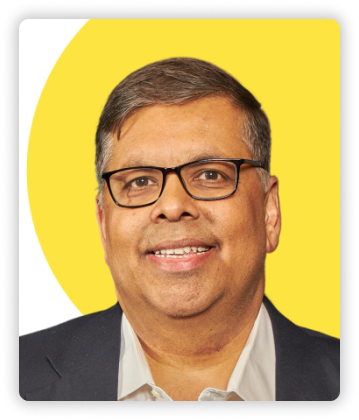
Saurabh Govil is the Chief Human Resources Officer at Wipro, and a member of the Management Team. He leads all Wipro’s HR functions, including talent acquisition, talent engagement, and learning and development programs.
Saurabh has been a HR practitioner for over two decades, and has worked with organizations like ITC and GE. Since joining Wipro in May, 2009, he has been instrumental in transforming the organization. His work with people, processes, and organizational structure over the last three years has contributed significantly to Wipro’s growth, improving operations and introducing many new initiatives.
Saurabh is an alumnus of XLRI, Jamshedpur where he completed his master’s in human resources. He is on the advisory board of SHRM India. Saurabh has been a regular speaker at NASSCOM’s HR summit. He also contributes to NHRDN’s journal as an author.
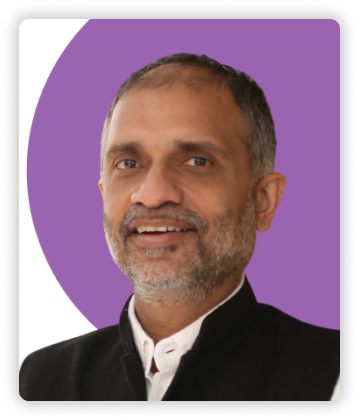
Anurag Behar is the Chief Sustainability Officer of Wipro Limited & Vice-Chancellor, Azim Premji University.
Anurag is a member of the Committee that has developed India’s National Education Policy (2019), the first comprehensive education policy for the country, since 1986. He has been deeply engaged with efforts to improve education in India, for the past seventeen years.
He has been a vocal advocate for the critical importance of public systems, in particular the public education system. His many years in business have given him an insider’s view of both the possibilities and limits of markets. For the past few years, he has also been engaged with environmental and ecological issues. He writes widely, including a fortnightly column for the national newspapers Mint & Hindustan, and other publications.
Anurag has earlier played leadership roles in business. As the CEO of Wipro Infrastructure Engineering, he led the business from being No. 20 in the world to being the No. 1 in 5 years. He has also been responsible for many corporate functions for Wipro including Brand, Quality, and Innovation. He continues to provide oversight to the social and ecological initiatives of the Wipro Group, as its Chief Sustainability Officer. He is a member of Wipro’s Group Executive Council.
Anurag has served on various boards including that of Wipro GE Healthcare Ltd, The University of Trans-Disciplinary Health Sciences, and of the TERI University. He serves on many government & sector councils, such as MHRD’s EQUIP, the National Mission on Teachers and Teacher Education, the Government of India implementation committee for the Justice Verma Commission, Karnataka Knowledge Commission, and with the CII’s National Climate Change Council.
He has an MBA from XLRI, Jamshedpur, and a BE in Electrical & Electronics Engineering from the National Institute of Technology, Trichy. Both institutions have honored him with their Distinguished Alumnus award. He was elected as a ‘Young Global Leader’, by the World Economic Forum in 2008. He enjoys long-distance running.
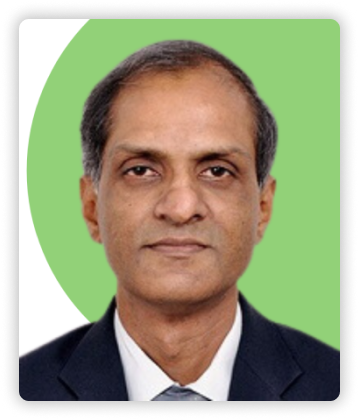
Narayan P S is the Global Head of Sustainability and Social Initiatives at Wipro Ltd. He is also the Managing Trustee at Wipro Foundation, the social initiatives arm of Wipro Ltd. He has been instrumental in the creation of Wipro’s sustainability initiative and has stewarded it since its inception in early 2008. Wipro’s sustainability charter is built on the core principle that business and social purpose must reinforce each other in addressing several key challenges around ecology and the environment, education, and communities.
In addition, Narayan is Visiting Faculty at the Azim Premji University where he teaches ‘Ecology and Development’ in the MA ( Development) program. He is also a Visiting Faculty at Xavier School of Sustainability, Xavier University, Bhubaneswar. Narayan also conducts learning sessions regularly on Sustainability at IIM Bangalore and IIM Indore.
Narayan’s interests center around (i) the broad interplay between Ecology, Economics, and Humanities (ii) the role of the business sector as a change agent in sustainable development (iii) Sustainability in Education, and (iv) Sustainable and Inclusive Cities.
Prior to the current role, Narayan was the Global Head of Information Systems for Wipro’s IT business, when he was chosen as one of CIO’s global 25 Ones to Watch.
A graduate in Electrical Engineering with a post-graduation in Management, Narayan has more than twenty-seven years of cross-disciplinary experience in Business Development, Enterprise Systems, and Corporate Sustainability. He is also involved in sustainability advocacy as a member of several industry forums on sustainability. He is currently the Chairman of the CII-GBC Greenco forum for Bangalore.


